Employment Law
Virginia is Developing Workplace Heat Illness Prevention Rules: Construction Employers Should Start Planning Now
July 13, 2026
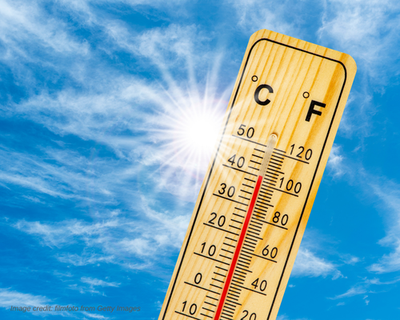
Northern Virginia and, indeed, much of the northeastern United States, is in the middle of a punishing stretch of summer heat. Washington, D.C. and Baltimore are reached 102 degrees, with National Weather Service extreme heat warnings in effect for parts of D.C., Maryland, and Virginia. New York City is also forecast to hit 100 degrees with dangerous [TH1] heat index values. For construction companies, this is not just a weather story. It is a workplace safety, scheduling, productivity, and compliance issue.
The Commonwealth of Virginia has now added another reason for construction companies to pay close attention to the weather. With the recent passage of HB 1092 and SB 288, the General Assembly directed the Virginia Safety and Health Codes Board (“Board”), in consultation with the Virginia Department of Labor and Industry (“DOLI”), to develop and adopt workplace heat illness prevention regulations. The new law adds Virginia Code § 40.1-44.2, which instructs the Board to adopt standards designed to protect workers from heat illness during both indoor and outdoor work.
What Does the New Virginia Law Require?
The statute does not itself create a full heat illness prevention program immediately. Rather, it authorizes the Board to develop and adopt regulations to be implemented by no later than May 1, 2028, requiring employers to implement heat illness prevention plans. While employers have some time before the final Virginia-specific requirements kick in, construction employers should not treat this as a distant issue.
The new law identifies the core elements that the regulations must include. The requirements include that employers must provide employees with water, access to shade or climate-controlled environments when practicable, rest periods, acclimatization to working in heat, and effective heat illness prevention training. The regulations must also mandate that employers implement heat and high-heat procedures when temperatures meet the thresholds to be set by the Board and to establish effective emergency response procedures.
The new Virginia law defines “heat illness” broadly to include heat cramps, heat rash, heat edema, heat exhaustion, heat syncope, rhabdomyolysis, and heat stroke. It also defines the term “worker” to include not only employees but also independent contractors, and other laborer whose worksite conditions are controlled by an employer. This expansive definition falls particularly heavily on the construction industry, where general contractors, subcontractors, staffing companies, independent contractors, and day laborers may all be present on the same job site.
Why Construction Employers Should Be Paying Attention
The construction industry is an obvious target of the heat illness regulation. Road work, roofing, concrete, framing, excavation, utility work, demolition, masonry, and site preparation often involve direct exposure to sun, radiant heat from equipment and materials, heavy physical exertion, PPE, and limited access to air-conditioned space. Even indoor construction work can involve high heat where ventilation is poor, mechanical systems are not yet operating, or work is performed in confined or partially enclosed areas.
The likely practical impact of Virginia’s eventual regulations will be that heat safety becomes an integral part of jobsite planning for construction companies, not merely an informal supervisor-by-supervisor judgment call. Virginia employers should anticipate requirements for written heat illness prevention plans, heat monitoring procedures, water and shade protocols, required rest breaks at certain thresholds, acclimatization procedures for new and returning employees, training obligations, and emergency response planning.
For construction employers, the hardest part of compliance may be operational coordination. For example, a general contractor may not directly employ every worker on a job site but may control the jobsite conditions. The statute’s broad definition of “worker” will likely increase pressure on controlling employers, like general contractors, to think beyond their own payroll and consider how heat protections are being implemented across trades. Subcontracts, site safety manuals, preconstruction meetings, daily huddles, and site-specific safety plans likely will all need to be revised with implementation of the Board’s new heat illness regulations.
How Does This Compare to OSHA’s Proposed Federal Rule?
Virginia’s new law appears to be shifting in the same general direction as federal OSHA’s proposed heat injury and illness prevention standard. OSHA’s proposed rule, as described in our prior blog OSHA Doubles Down on Workplace Heat Enforcement: What Employers Need to Know About the Expanded Heat National Emphasis Program, would establish federal workplace heat standards for the first time and would apply broadly to outdoor and indoor work settings, including construction. The OSHA proposal would require employers to develop a worksite-specific heat injury and illness prevention plan, identify heat hazards, implement control measures, provide training, and maintain certain records.
There are important similarities. Both the federal proposal and Virginia’s new law focus on written planning, water, rest, shade or cooling, acclimatization, training, heat-triggered procedures, and emergency response. Both also recognize that heat illness prevention must be tied to actual workplace conditions rather than treated as a generic policy in an employee handbook.
There are also key differences. OSHA’s proposed heat illness rules are more detailed at this stage. The proposal discussed in our prior blog used an initial heat trigger of 80 degrees Fahrenheit and a high heat trigger of 90 degrees Fahrenheit, with additional requirements at the higher threshold, including more active observation and cooling measures. Virginia’s new statute does not set the heat thresholds itself. Instead, it leaves those thresholds to the Board to establish.
Virginia’s new law also directs the Board to consider multiple sources in developing the final regulations, including the Virginia DOLI’s 2021 Draft Heat Illness Prevention Standard and standards from federal OSHA, NIOSH, ACGIH, ANSI, Maryland, Oregon, and California. That means Virginia’s final rule could borrow heavily from OSHA’s proposal, but it could also be shaped by state-level approaches that are more prescriptive in certain areas.
What Exemptions Will Apply?
The new Virginia law identifies limited exemptions. For instance, the future regulations must exempt heat exposure during certain emergency services, including emergency law enforcement, emergency medical services, firefighting, rescue and evacuation operations, emergency highway construction or maintenance, and emergency restoration of essential utilities. The new law also exempts heat exposure lasting no longer than 15 consecutive minutes.
For most construction employers, those exemptions will not likely eliminate the need for compliance with the new law. Ordinary construction activity during hot weather will likely be covered. Even highway and utility contractors should be careful. The emergency exemption appears directed at true emergency work, not routine scheduled work performed in hot conditions.
What Should Construction Employers Do Now?
The Virginia heat illness regulations are not final. Nevertheless, waiting until 2028 is a poor strategy, especially for employers in high-risk industries. Construction employers should begin by identifying which tasks, trades, and jobsites create the greatest heat exposure. Outdoor work is the obvious starting point, but employers should also consider warehouses, fabrication areas, unfinished buildings, attics, crawlspaces, mechanical rooms, and other indoor locations where heat can accumulate.
Virginia employers should also review their current safety policies to determine whether or to what extent they may already address the anticipated requirements for water, shade, rest breaks, acclimatization, supervisor monitoring, emergency response, and employee training. Many companies already have some informal heat-related practices in place, but informal practices are hard to defend during a VOSH inspection, workers’ compensation claim, injury investigation, or dispute with a subcontractor.
Construction companies should also consider adding heat illness prevention expectations to subcontractor agreements and site safety requirements. At a minimum, project leadership should know who is responsible for monitoring heat conditions, where water and shade will be available, how rest breaks will be handled without creating trade-stacking problems, who has authority to stop work, and what steps supervisors must take when a worker shows signs of heat illness.
We will continue to monitor the development of Virginia’s heat illness prevention regulations. In the meantime, construction employers should treat HB 1092 and SB 288 as an early warning signal. Heat illness prevention is moving from informal best practices to regulated obligations in Virginia. The construction industry will be one of the first places Virginia regulators are likely to look. For more information or assistance, please feel free to reach out to Timothy Hughes at (703) 526-5592, thughes@beankinney.com, or Doug Taylor at (703) 526-5586, rdougtaylor@beankinney.com.
This article is for informational purposes only and does not contain or convey legal advice. Consult an attorney. Any views or opinions expressed herein are those of the author and are not necessarily the views of the firm or any client of the firm.