Construction
America’s 250th Birthday Is Creating Construction Opportunity and Risk in the D.C. Region
June 18, 2026
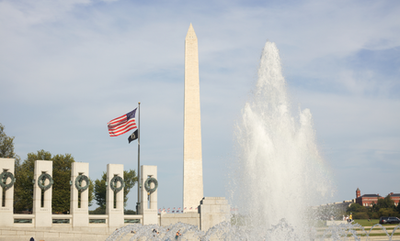
As the United States prepares for the semi quincentennial on July 4, 2026, Washington, D.C. is not just hosting the national commemoration. It is building for it. America 250 has accelerated attention on public spaces, historic assets, transportation support, accessibility, and visitor infrastructure across the region.
For contractors, subcontractors, design professionals, suppliers, and owners, the milestone creates a familiar capital-region pattern: a national event becomes a deadline for long-planned work. That can mean new opportunities, but it also means tighter schedules, heightened coordination, and less margin for avoidable legal or logistical mistakes.
Why the National Mall is the Center of the Buildout
The National Mall is the most visible example. The National Park Service is opening the Lincoln Memorial undercroft, a 15,000-square-foot exhibit area beneath the memorial, to the public on June 25, 2026. The Trust for the National Mall and the National Park Service have also described a broader America 250 program that includes legacy restoration projects, civic learning initiatives, volunteer programming, and commemorative events on the National Mall and at the White House and President’s Park.
These projects matter beyond tourism. They involve historic preservation, public-space upgrades, hardscape and landscape work, utilities, lighting, signage, accessibility improvements, security planning, and visitor-flow management. In a dense urban environment, each of those scopes can affect adjacent construction, deliveries, staging, and work windows.
Which Construction Sectors May Benefit?
Near-term demand is likely to concentrate in public works, historic restoration, landscaping, electrical, lighting, utilities, paving, temporary structures, event logistics, transportation support, public safety infrastructure, hospitality-related improvements, and rapid-response maintenance.
These are not only “event” needs. The semi quincentennial has turned attention to assets that must function under heavy use: sidewalks, roads, signs, transit connections, park features, memorial grounds, security barriers, crowd-control equipment, and accessible routes. For firms with federal, District, transportation, or institutional experience, the next phase may favor contractors that can mobilize quickly and document compliance carefully.
For What Risks Should Contractors Plan ?
Construction firms should expect America 250 projects and events to create unusual coordination issues. D.C. has listed major national and District programming connected to the 250th, including July 4 events, and WMATA has posted special Independence Day Metrorail hours from 6 a.m. to 2 a.m. WMATA has also identified summer bus-route detours tied to road closures for anniversary events. Separately, Reuters reported that Reagan National Airport is expected to close for much of July 4 because of 250th-anniversary events, with additional disruptions on July 3 and other dates.
Those facts point to a practical construction issue: access. Contractors working near the National Mall, federal buildings, event corridors, transit hubs, hotels, or major approach routes may face restricted staging areas, shifted delivery windows, parking limitations, security screening, emergency no-parking zones, or work stoppages caused by closures and public-safety directives.
What Contract Clauses Should D.C.-Area Contractors Review Before Mobilizing?
Contractors working in downtown Washington, D.C., and around the National Mall should review five contract terms before mobilizing: force majeure, excusable delay and suspension rights, change-order procedures, price-escalation terms, and written notice requirements.
Those clauses will determine who bears the time and cost impact if America 250 road closures, federal or local security perimeters, utility conflicts, labor shortages, material-price changes, or owner-directed scope changes affect performance. The best practice is to confirm the notice deadline, the required form of notice, the person who must receive it, and the documentation needed to preserve a claim before the project starts.
Project teams should also update delivery plans, site-access maps, subcontractor schedules, procurement logs, and daily reports so that disruption impacts can be tied to specific events rather than described generally after the fact.
What the Semi Quincentennial Signals Long Term
America’s 250th birthday is not only a one-day celebration. It is also a reminder that Washington’s civic infrastructure is aging and heavily used. Historic Park features, memorial landscapes, visitor routes, and public spaces have endured decades of weather, foot traffic, and evolving security needs. The 2026 milestone is therefore acting as both a celebration and a catalyst for reinvestment.
Bottom Line for D.C. Construction Firms
America 250 offers D.C.-area construction firms a chance to contribute to nationally visible projects at a defining moment for the capital region. The firms best positioned to benefit will be the ones that combine technical execution with contract discipline: verifying access, documenting delays, pricing changes promptly, tracking escalation, preserving notice rights, and coordinating closely with owners, agencies, suppliers, and subcontractors.
In the Washington, D.C. urban core, construction success during the semi quincentennial will depend on more than building well. It will depend on planning for legal, logistical, and operational risk before a closure, crowd-control measure, or schedule change becomes a claim.
If you’d like guidance for your construction business, please contact Juanita Ferguson at (703) 284-7243 or jferguson@beankinney.com.
This article is for informational purposes only and does not contain or convey legal advice. Consult a lawyer. Any views or opinions expressed herein are those of the authors and are not necessarily the views of any client.