Divorce and Family Law
Phones Down: What Do New School Phone Restrictions Mean for my Child – and My Custody Case?
August 6, 2026
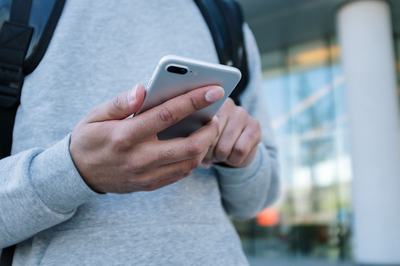
As smartphones have become nearly universal, they have also become a growing challenge in schools. Teachers now compete not only with whispered conversations and passing notes, but with text messages, social media, games, videos, and a constant stream of notifications. A phone can distract an entire classroom in seconds, fuel conflicts that begin online and spill into the school day, and make it harder for students to focus, participate, and connect with one another. Now, there is a growing trend towards limiting kids’ abilities to use their smartphones in school – and Virginia and Maryland are both getting in on the trend.
Both Maryland and Virginia enacted legislation requiring public school systems to adopt policies restricting or prohibiting student cell phone and electronic device use during the school day, effective July 1, 2026. While they share a common objective, the two statutes differ in structure, scope, compliance timelines, and the obligations they impose on school boards.
Virginia’s Law: Bell-to-Bell Restriction and Prohibition
Virginia’s SB 108 amends § 22.1-79.3:1 of the Code of Virginia, strengthening its requirements for school boards to develop age-appropriate policies on student cell phone and smart device use. The law now requires all public K-12 schools to enforce a “bell to bell” policy, meaning all smart devices must be turned off and stored away for the entire school day, from the opening bell to the final dismissal bell.
Smart devices include smart phones, but also other devices such as smart watches, which are growing in popularity and have become more common in elementary schools for children not quite ready for smart phones. These devices can’t be used during class, but also during lunch periods and time between classes, when phones are often ubiquitous in the halls of high schools and middle schools. School districts have discretion in how to enforce this policy, including the option to utilize locking phone storage pouches and disciplinary measures. A violation of this policy on its own cannot be cause for suspension or expulsion, however use of the device for prohibited conduct can be. Virginia’s law requires policies to be in place now, in time for the 2026 – 2027 school year.
Maryland’s Law: The Joanne C. Benson Maryland Phone-Free Schools Act
Maryland’s new law, § 7-137 in the Education Article of the Annotated Code of Maryland, creates a comprehensive new structure that no longer simply limits, but prohibits, the use of an electronic communication device (except under certain specific circumstances). Maryland’s law mirrors the bell-to-bell requirement of Virginia’s law, but has an even broader definition of the devices included - cell phones, tablets, laptops, smart watches, wireless earbuds or headphones, geolocation devices, and any other device with communication functions. It also separately defines social media platforms and prohibits students from accessing them during the school day in any capacity. Like Virginia, Maryland prohibits suspension or expulsion as a sole consequence for a violation of the cell phone policy. Maryland also allows school systems extra time, until the 2027-2028 school year, to implement new policies consistent with the law.
What are the custody implications?
Many custody orders and agreements address cell phone policies within families, as well as access to children more generally via electronic devices. Implementation of these new policies very well could limit a parent’s ability to reach a child during school hours, and will require parents to ensure they have reliable access to their children’s school to handle emergencies or other issues that may arise during the school day.
Parents will also want to work together, where possible, to ensure they create a family policy that comports with the policy in place at their children’s school. They need to discuss what devices a child will have, when he/she will have access to them, how they will travel between homes, and where they will be safely stored during the school day.
Parents may also have concerns about the impact on their child’s education. Under Virginia’s law, students with an Individualized Education Plan (IEP), Section 504 Plan, individualized health care plan, diabetes medical management plan, or Limited English Proficiency plan must be permitted to possess and use a cell phone or smart device, including in the classroom, during the bell-to-bell period, to monitor or address a health concern or as an accommodation or assistive technology support.
Similarly, Maryland’s statute specifies six categories of permitted use that the policy may not prohibit, including for students with accommodations (including IEP and 504 plans), health issues requiring monitoring, when used by teachers as part of a lesson, for caregiving responsibilities approved by a principal, for access to language translation tools to ensure educational equity for multilingual students, and during an emergency event if authorized by an administrator.
If you have questions about the impact of these new policies on your custody plan or school choice issues, please contact Michelle Bieber at 703.284.7270 or mbieber@beankinney.com.
This article is for informational purposes only and does not contain or convey legal advice. Consult a lawyer. Any views or opinions expressed herein are those of the authors and are not necessarily the views of any client.