Legal Guidance for FMLA, ADA & Workplace Leave Compliance
Managing employee leave and accommodation requests requires careful adherence to federal, state, and local laws. Employers must balance operational needs with statutory obligations under laws such as the Family and Medical Leave Act (FMLA), the Americans with Disabilities Act (ADA), the Pregnant Workers Fairness Act (PWFA), and various state and local leave statutes.
Bean, Kinney & Korman advises employers throughout Virginia, Maryland, and the Washington, D.C. region on leave administration, reasonable accommodation planning, and compliance strategies. We help organizations navigate complex legal requirements while minimizing litigation risk and ensuring consistent, defensible decision-making.
Our approach emphasizes proactive counseling, clear documentation, and structured compliance processes to reduce exposure to retaliation, discrimination, and wrongful termination claims.
Leave & Accommodation Legal Services
FMLA & Family Leave Compliance
- Coverage and eligibility analysis
- Leave designation and documentation review
- Intermittent leave management
- Medical certification compliance
- Return-to-work planning
We help employers avoid common FMLA pitfalls that can lead to litigation.
ADA & Reasonable Accommodations
- Interactive process guidance
- Accommodation evaluation and documentation
- Disability-related leave analysis
- Job restructuring and modified duty planning
- Risk assessment before adverse employment action
Clear documentation and structured analysis are critical in ADA matters.
Pregnancy & Related Accommodations
- Compliance with federal and state pregnancy laws
- Reasonable accommodation evaluation
- Leave coordination with disability and family leave laws
- Policy updates and training
We help employers respond consistently and lawfully to pregnancy-related accommodation requests.
State & Local Leave Law Compliance
- Paid sick leave and family leave mandates
- Multi-state compliance coordination
- Interaction between federal, state, and local leave frameworks
- Policy drafting and handbook updates
Employers operating across jurisdictions require customized compliance strategies.
Risk Mitigation & Litigation Avoidance
- Documentation review prior to termination
- Retaliation exposure analysis
- Investigation of leave-related complaints
- Compliance audits and training programs
Early legal involvement significantly reduces the risk of costly disputes.
Who We Represent
Our Leave & Accommodation practice supports:
- Small and mid-sized employers
- Government contractors
- Healthcare and regulated entities
- Construction and development firms
- Professional services organizations
- Franchise and multi-location businesses
- Nonprofit and association employers
We provide ongoing advisory support to HR professionals and executive leadership.
Industries Served
We advise employers across industries including:
- Government contracting
- Healthcare and life sciences
- Construction and infrastructure
- Technology and professional services
- Hospitality and retail
- Financial services
- Nonprofit and association sectors
Industry-specific compliance obligations are incorporated into every leave and accommodation strategy.
Leave & Accommodation FAQs
What is the FMLA and who qualifies?
The Family and Medical Leave Act (FMLA) provides eligible employees with up to 12 weeks of unpaid, job-protected leave for qualifying medical and family reasons. Eligibility depends on employer size, employee tenure, and hours worked.
What is the “interactive process” under the ADA?
The interactive process is a collaborative dialogue between employer and employee to determine reasonable accommodations for a disability. Employers must engage in good faith discussions and document their evaluation of accommodation options.
Can an employer deny a leave or accommodation request?
Employers may deny accommodation requests if they create undue hardship, fail to meet eligibility criteria, or are not medically supported. However, denial must be carefully evaluated and documented to reduce litigation risk.
How do federal, state, and local leave laws interact?
Federal leave laws such as the FMLA may operate alongside state or local paid leave statutes. Employers must determine whether leave runs concurrently or separately and ensure compliance with the most protective applicable law.
Why do leave issues often lead to litigation?
Leave and accommodation disputes frequently involve termination decisions, retaliation claims, or alleged failure to accommodate. Inconsistent documentation or improper designation often increases exposure.
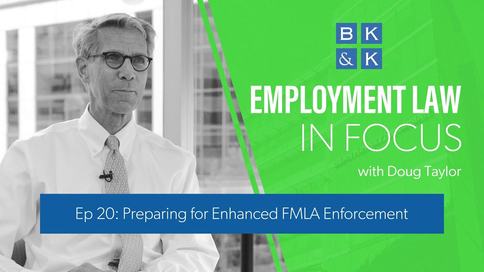
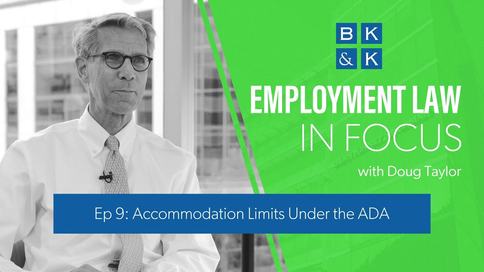
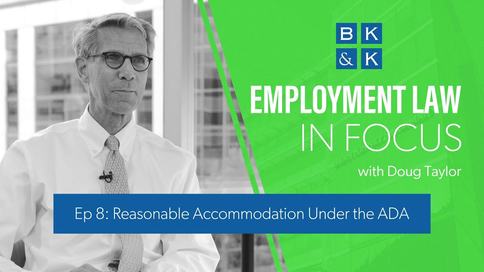
Videos


Recent Highlights
Blog Post

What Is Worrying Our Nonprofit Clients – Part V: Political Risk and the Nonprofit Mission
Event
On Board: Elevating Nonprofit Board Leaders, presented by Leadership Center of Arlington
Video

The BKK Beat, Episode 32: IP Law in the News - Fender's Stratocaster, Part 5
News / Publication

23 Attorneys from Bean, Kinney & Korman Recognized as Top Attorneys for 2026 by Arlington Magazine
Blog Post

When Can Nonprofit Employees Volunteer for Their Employer?
Event

What the New Non-Compete Rules Mean for Virginia Employers
Video

The BKK Beat, Episode 31: IP Law in the News - Fender's Stratocaster, Part 4
News / Publication