Proactive Legal Strategy to Minimize Project Risk & Protect Long-Term Value
Construction projects carry inherent risk — financial exposure, delay liability, regulatory compliance, insurance gaps, subcontractor performance issues, payment conflicts, and safety obligations. Effective risk management is not simply about responding to disputes and instead begins at project planning and continues through completion.
Bean, Kinney & Korman advises owners, developers, contractors, lenders, and project stakeholders on construction risk management strategies throughout Maryland, Virginia, and the Washington, D.C. region. We help clients identify legal risk early, structure contracts thoughtfully, align insurance coverage, and implement compliance protocols that reduce exposure.
Our approach integrates contract drafting, insurance review, regulatory compliance, and litigation awareness to protect both financial and operational interests.
Construction Risk Management Services
Contractual Risk Allocation
Well-structured contracts are the first line of defense against project disputes.
- Indemnification and hold-harmless clauses
- Limitation of liability provisions
- Liquidated damages language
- Change order controls
- Force majeure and delay allocation
- Dispute resolution planning
We draft and review agreements to clarify responsibility before conflicts arise.
Insurance & Bonding Strategy
Insurance coordination is central to effective construction risk management.
- Review of general liability and builder’s risk policies
- Professional liability considerations
- Additional insured and waiver of subrogation analysis
- Performance and payment bond structuring
- Coordination between contractual obligations and coverage
Aligning insurance with contract language prevents coverage disputes later.
Regulatory & Licensing Compliance
Construction risk extends beyond contracts into statutory and regulatory frameworks.
- Contractor licensing compliance
- Safety and regulatory advisory
- Public works compliance
- Government contract flow-down risk analysis
- Payment timing and mechanic’s lien statute compliance
We help clients reduce exposure to administrative penalties and enforcement actions.
Project Oversight & Documentation
Proper documentation is essential to defending claims and preserving rights.
- Documentation best practices
- Delay notice protocols
- Subcontractor oversight structures
- Change order recordkeeping systems
- Risk audits during project lifecycle
Good documentation often determines litigation outcomes.
Risk Assessment in Financing & Development
Construction projects frequently involve lenders, investors, and joint venture partners.
- Risk review in construction financing
- Completion guarantees
- Joint venture risk allocation
- Collateral protection planning
Early legal involvement enhances financial stability and investor confidence.
Who We Represent
Our Construction Risk Management practice serves:
- Real estate developers
- Commercial property owners
- General contractors and subcontractors
- Construction lenders
- Design professionals
- Public works participants
- Infrastructure contractors
- Franchise and multi-location developers
We tailor risk strategy to each party’s role and exposure.
Verticals Served
We advise clients managing construction risk in industries including:
- Commercial real estate development
- Retail and hospitality construction
- Industrial and warehouse facilities
- Healthcare and institutional projects
- Government and public infrastructure
- Mixed-use and multi-family developments
- Defense and federal construction projects
Industry awareness strengthens preventative risk planning.
Construction Risk Management FAQs
What is construction risk management?
Construction risk management involves identifying, allocating, and mitigating legal and financial risks in construction projects through contract drafting, insurance alignment, compliance planning, and documentation practices.
Why is insurance review important in construction projects?
Insurance coverage must align with contractual risk allocation. Mismatched indemnity clauses and coverage gaps can leave parties exposed to uninsured losses.
How can legal counsel reduce construction disputes?
Legal counsel can identify unclear risk allocation, revise contract language, establish documentation protocols, and align insurance coverage — significantly reducing dispute likelihood.
When should construction risk planning begin?
Risk management should begin during project planning and contract negotiation — not after construction begins. Early involvement strengthens leverage and reduces exposure.
Does risk management eliminate litigation?
No strategy eliminates all risk, but disciplined risk management significantly reduces the likelihood and severity of disputes.






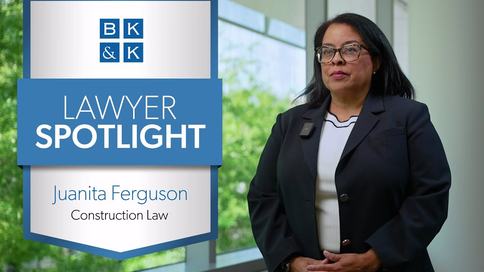
Videos
Recent Highlights
Blog Post

What Is Worrying Our Nonprofit Clients – Part V: Political Risk and the Nonprofit Mission
Event
On Board: Elevating Nonprofit Board Leaders, presented by Leadership Center of Arlington
Video
The BKK Beat, Episode 32: IP Law in the News - Fender's Stratocaster, Part 5
News / Publication
23 Attorneys from Bean, Kinney & Korman Recognized as Top Attorneys for 2026 by Arlington Magazine
Blog Post

When Can Nonprofit Employees Volunteer for Their Employer?
Event
What the New Non-Compete Rules Mean for Virginia Employers
Video
The BKK Beat, Episode 31: IP Law in the News - Fender's Stratocaster, Part 4
News / Publication