Strategic Legal Advocacy in State & Federal Appeals
When a court ruling does not achieve the desired result, the next critical step is appellate review — a distinct legal arena requiring specialized expertise in legal analysis, written advocacy, and procedural strategy. Appellate practice is not simply “more litigation”; it involves a refined approach to legal argument, record evaluation, and preservation of error.
Bean, Kinney & Korman provides appellate representation in federal and state courts, helping clients pursue or defend appeals following trial court decisions. Our attorneys bring disciplined briefing skills, courtroom advocacy, and a deep understanding of appellate standards to every matter.
We represent clients in civil and commercial matters at the appellate level, offering strategic guidance on where appellate arguments can be most persuasive and how to preserve issues for appeal at the earliest stages of litigation.
Appellate Services
Appellate Planning & Preservation
- Identifying appealable issues
- Preserving the record during trial
- Strategic brief planning early in litigation
- Advising on standard of review implications
Strategic preservation is essential to appellate success.
Appellate Brief Writing
- Opening briefs and appellee responses
- Amicus briefing strategy
- Concise statement of facts and legal argument
- Record citations and issue framing
Effective briefs simplify complex legal issues and persuade appellate panels.
Oral Argument Preparation & Presentation
- Case theme development
- Argument roadmap and key points
- Mock argument sessions
- Coordination with trial counsel
Oral argument can crystallize critical issues for appellate judges.
Cross-Forum Appellate Work
- Appeals in state intermediate and supreme courts
- Federal appellate practice (U.S. Courts of Appeals)
- Petition for writ of certiorari strategy
- Appellate jurisdiction and standing analysis
We tailor appellate strategy to each procedural environment.
Post-Decision Strategy
- Mandate and opinion enforcement
- Petition for rehearing or rehearing en banc
- Preparation of petitions for certiorari
- Appellate judgment enforcement
Navigating post-decision options requires nuanced procedural judgment.
Who We Represent
Our Appellate Practice serves:
- Businesses engaged in commercial litigation
- Government contractors in procurement disputes
- Corporate executives in employment disputes
- Professionals facing regulatory appeal issues
- Closely held companies advocating contractual rights
- Plaintiffs and defendants seeking appellate review
- Nonprofit and association entities with legal challenges
We tailor appellate strategy to case complexity and client objectives.
Industries Served
We advise clients in industries where appellate work often arises from underlying disputes, including:
- Government contracting and bid protests
- Commercial and contract disputes
- Employment and workplace litigation
- Intellectual property enforcement matters
- Construction and infrastructure disputes
- Financial and professional services
- Healthcare and regulated industries
- Real estate, development, and leasing litigation
Our industry knowledge enhances issue framing, risk assessment, and persuasive strategy.
Appellate Practice FAQs
What is appellate practice?
Appellate practice is the legal discipline focused on reviewing trial court decisions in higher courts. It involves legal briefs, record review, and presentations before appellate judges. Appellate lawyers specialize in argument structure, procedural standards, and persuasive writing.
When should appellate issues be preserved?
Appellate issues must typically be preserved at trial through timely objections, motions, and record clarity. Failure to preserve issues may preclude appellate review. Early planning is essential.
What is the “standard of review”?
The standard of review determines how appellate courts evaluate trial court decisions — for example, de novo (fresh review), abuse of discretion, or clearly erroneous standards. Appellate strategy depends heavily on these standards.
What is required in an appellate brief?
Appellate briefs typically include a concise statement of facts, issues presented, legal argument supported by precedent, record citations, and explanations of why the lower court’s ruling was correct or should be reversed.
Do appellate courts hear new evidence?
No. Appellate courts review the trial record and legal arguments. New evidence is generally not permitted. Appellate advocacy focuses on legal error, interpretation of law, and application of standards to existing facts.






Representative Matters
Atlantic Funding Corp v. Peterson, 00-1807, 2001 U.S. App. LEXIS 15996 at *1 (4th Cir. July 18, 2001)
View document (PDF)Peterson v. Atlantic Funding Corp., No. 97-1680, 1998 U.S. App. LEXIS 27283 at *1 (4th Cir. 1998)
View document (PDF)Videos





News & Publications

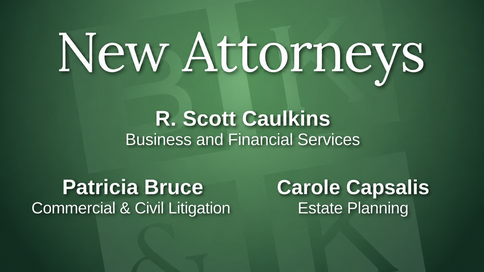


Recent Highlights
Blog Post

Virginia's Faith in Housing Act: What Tax-Exempt Landowners Should Be Doing Before January 1, 2027
Event

On Board: Elevating Nonprofit Board Leaders, presented by Leadership Center of Arlington
Video
The BKK Beat, Episode 32: IP Law in the News - Fender's Stratocaster, Part 5
News / Publication

24 Bean, Kinney & Korman Attorneys Recognized in The Best Lawyers in America® 2027 Edition; Six Recognized in Best Lawyers: Ones to Watch® in America
Blog Post

Virginia's July 1 Zoning Changes Already Bind Fairfax County. The Zoning Ordinance Has Not Caught Up.
Event

What the New Non-Compete Rules Mean for Virginia Employers
Video
The BKK Beat, Episode 31: IP Law in the News - Fender's Stratocaster, Part 4
News / Publication